How to Write a Resume That Gets Shortlisted in 2026: A Practical Indian HR Guide
By the LearnEarnScale Editorial Team | Last updated: June 2026 | Category: Career Growth
—
Featured Product: Best Resume & Career Toolkit
Top Pick: The 2026 Resume Scorecard + Interview Preparation Bundle (Digital)
- Best For: Job seekers in India who want ATS-friendly resumes and interview readiness in one package
- Why It Works: Includes 20-point resume checklist, ATS test links, two ready-to-use templates (fresher + experienced), and 50+ interview Q&A
- Key Features: PDF download, editable Google Docs templates, ATS compatibility tested
- Pros: Instant download, India-specific tips, regularly updated for 2026 hiring trends
- Cons: Digital product only, no physical shipping
- Price Range: ₹199–₹499
- Amazon/Store Link: [AFFILIATE_LINK_RESUME_BUNDLE]
Check Latest Price | View Current Offers | See Customer Reviews
—
Quick Summary
In 2026, recruiters spend an average of 7–10 seconds on each resume. If you are a job seeker in India — whether you are a fresher, a final-year student, or a working professional switching careers — this guide will help you rewrite your resume so it survives the first scan and earns an interview call.
—
Table of Contents
- The 2026 Resume Reality Check
- Choose the Right Format
- ATS-Friendly Resume Rules
- Resume Sections That Matter
- How to Write Bullet Points That Convert
- Fresher Resume Template (Indian Context)
- Experienced Professional Resume Template
- Common Resume Mistakes in 2026
- Resume for Off-Campus vs On-Campus Placements
- How to Optimize for LinkedIn & Naukri
- Resume Myths Busted
- FAQ – Resume Writing for 2026
- Recommended Products
- Conclusion
- Call to Action
—
1. The 2026 Resume Reality Check
Resume writing advice on the internet is mostly recycled from 2015. The hiring landscape in India has changed:
- 60% of Indian companies use ATS (Applicant Tracking Systems) for initial screening.
- 35% of resumes contain false or exaggerated information, making recruiters more skeptical.
- Freshers with project-based resumes get 2x more interview calls than those with generic objective statements.
- Side projects and internships now matter more than GPA for tech and startup roles.
What recruiters actually look for
- Can this person do the job?
- Will this person stay for at least 12 months?
- Can this person communicate clearly?
Your resume must answer all three within one page.
—
2. Choose the Right Format
| Format | Best For | Notes |
|—|—|—|
| Reverse Chronological | Most Indian jobs | Reads naturally for ATS |
| Functional / Skills-based | Career changers | Use only if you have strong transferable skills |
| Hybrid | Senior professionals | Combines skills + experience |
| One-page | Freshers, <3 years exp | Mandatory in 2026 |
| Two-page | 3+ years experience | Only if every line adds value |
Recommendation
- Fresher in 2026: Reverse chronological, one page
- Working professional: Reverse chronological, max two pages
- Career switcher: Hybrid, one to two pages
Avoid the “creative” resume with charts, graphics, and colored blocks — it will break ATS parsing.
—
3. ATS-Friendly Resume Rules
What is ATS?
An Applicant Tracking System is software that reads your resume, extracts data, and ranks it against the job description. If your formatting is poor, the ATS misreads or rejects your resume before a human sees it.
Safe formatting rules
| Do | Don’t |
|—|—|
| Use standard fonts (Arial, Calibri, Times New Roman) | Don’t use headers/footers for contact info |
| Use standard section names | Don’t use graphics, tables, or text boxes |
| Use .docx or .pdf (check employer preference) | Don’t use images or icons |
| Use standard bullet characters | Don’t use fancy symbols or borders |
| Include keywords from the job description | Don’t keyword-stuff |
Metadata check
- File name: `YourName_Resume_Role.pdf`
- Do not use `Resume_Final_V3.pdf`
—
4. Resume Sections That Matter
Header
- Full name
- Phone number
- Email (professional, not `coolboy123@gmail.com`)
- LinkedIn URL
- GitHub / portfolio link (if applicable)
- Location (City, State — not full address)
Professional Summary (freshers: “Objective” is outdated)
Write 3–4 lines answering: Who are you? What can you do? What do you want?
Example for a CSE fresher:
> “Final-year Computer Science student with hands-on experience in Python, Flask, and SQL. Built a campus event management app used by 500+ students. Looking for an SDE internship to contribute to backend development and grow under experienced mentors.”
Education
| Field | Details |
|—|—|
| Degree | B.Tech CSE, 2022–2026 |
| University | VTU / Anna University / GGSIPU |
| CGPA/Percentage | 8.2/10 or 78% |
| Relevant coursework | DSA, DBMS, OS, Networks, ML basics |
Include only if strong: 12th marks, 10th marks.
Projects
Include 2–3 projects in reverse chronological order.
Example format:
> Campus Event Management System
> – Tech: Python, Flask, SQLite
> – Outcome: Handled registration for 8 college events, reduced manual effort by 70%
> – Link: github.com/yourusername/campus-events
Experience / Internships
Use action verbs and metrics.
| Bad | Good |
|—|—|
| “Worked on a website.” | “Developed a responsive landing page using HTML/CSS, achieving 95+ Lighthouse performance score.” |
| “Handled social media.” | “Grew Instagram engagement from 1.2% to 3.8% in 3 months via reels and carousels.” |
Skills
Group by category:
- Languages: Python, Java, SQL
- Tools: Git, Docker, Figma, Canva
- Soft Skills: Communication, teamwork, problem-solving
Certifications
Include only if verified and relevant. Coursera, NPTEL, Google Digital Garage, AWS Cloud Foundations are respected in India.
—
5. How to Write Bullet Points That Convert
Use the XYZ formula: “Accomplished [X] as measured by [Y], by doing [Z].”
Before
> “Did content writing for a startup.”
After
> “Wrote 18 SEO-optimized articles for a SaaS startup, driving 12,000+ monthly organic impressions within 2 months.”
More examples
- “Reduced data entry errors by 40% by introducing a validation checklist.”
- “Managed ₹50,000 budget for college fest sponsorship, exceeding target by 25%.”
- “Tutored 12 students in Class 12 Mathematics, with 10 scoring above 90%.”
Numbers attract attention. Even estimates are better than vague statements.
—
6. Fresher Resume Template (Indian Context)
“`
ANKIT SHARMA
+91-98XXXXXXXX | ankit.sharma@gmail.com | linkedin.com/in/ankitsharma | github.com/ankitsharma | Bengaluru, Karnataka
PROFESSIONAL SUMMARY
Full-stack web development enthusiast with strong fundamentals in HTML, CSS, JavaScript, and Node.js. Built two deployed projects with real users. Looking for an internship to apply problem-solving skills in a product-oriented environment.
EDUCATION
B.Tech Computer Science, 2022–2026
VIT Vellore | CGPA: 8.4/10
PROJECTS
- Mood-Based Music Recommendation System
- Tech: Python, Flask, scikit-learn
- Outcome: 94% recommendation accuracy on test dataset
- github.com/ankit/mood-music
- College Attendance Portal
- Tech: PHP, MySQL, Bootstrap
- Outcome: Used by 2 departments, reduced admin time by 60%
INTERNSHIP
Web Developer Intern | EduTech Startup | Jan 2025 – Mar 2025
- Developed 6 responsive pages using HTML/CSS/Bootstrap
- Improved mobile page load time by 35%
SKILLS
Languages: Python, JavaScript, PHP, SQL
Tools: Git, Figma, Postman, XAMPP
Soft Skills: Communication, teamwork
CERTIFICATIONS
- Google Analytics for Beginners (Google Digital Garage)
- Python for Everybody (Coursera)
“`
—
7. Experienced Professional Resume Template
For professionals with 2–5 years experience, keep the reverse chronological structure but emphasize results over responsibilities.
Example bullet
| Weak | Strong |
|—|—|
| “Managed a team.” | “Led a 5-member content team; increased organic traffic from 12K to 48K monthly sessions.” |
| “Handled client communication.” | “Retained 4 key B2B clients by introducing weekly reporting and proactive risk mitigation.” |
If you have done anything that saved money, made money, or saved time — lead with that.
—
8. Common Resume Mistakes in 2026
- Long, generic objectives: Recruiters skip them.
- Using “I”: Resumes are not autobiographies. Start bullets with action verbs.
- Listing duties instead of outcomes: Always quantify results.
- Spelling errors in tech terms: JavaScript, not Java Script; GitHub, not Github.
- Outdated skills: Remove MS Office from skill lists unless you are applying for admin roles.
- Including irrelevant personal info: Marital status, religion, full address, passport number are unnecessary for most private-sector roles in India.
- Generic cover letters: Recruiters can spot a template within seconds.
—
9. Resume for Off-Campus vs On-Campus Placements
| Parameter | On-Campus | Off-Campus |
|—|—|—|
| Volume of applications | Controlled by TPO | Very high |
| Screening method | Resume + GD + Test | Resume + Aptitude + Interview |
| Resume expectation | Good academics + projects | Projects + internships + skills |
| Best strategy | Match the company’s core requirements | Customize one resume per profile |
Tip
For off-campus roles, add a “Key Projects” section before “Experience” if you have strong projects but weak work history.
—
10. How to Optimize for LinkedIn & Naukri
- Use a professional headline, not just your degree.
- Add 5–8 core skills and get endorsements.
- Write a 2-paragraph “About” section showing your journey and goals.
Naukri
- Update profile every 2 weeks (the algorithm favors active profiles).
- Upload two resume versions: one generic, one tailored for your target role.
- Mention expected CTC and notice period clearly.
Common mistake
Copy-pasting the resume into LinkedIn bullet points. LinkedIn allows a more narrative tone — use it.
—
11. Resume Myths Busted
| Myth | Reality |
|—|—|
| One-size-fits-all resume | Customize per role |
| Fancy design beats plain | ATS beats fancy design |
| GPA is most important | Projects + internships matter more |
| Long resumes show more value | Quality over quantity |
| Objective statement is required | Professional summary is modern standard |
| Keywords don’t matter | Keywords determine ATS match |
—
12. FAQ – Resume Writing for 2026
Q1: Should freshers include a photo in Indian resumes?
Not recommended for IT, fintech, and product roles. Required only for customer-facing and government roles.
Q2: How many pages should a fresher resume be?
One page. Period.
Q3: Is cover letter necessary in 2026?
For most Indian IT and startup roles, no. For MNC, government, and off-campus applications, yes.
Q4: Can I use AI tools like Grammarly or Notion AI to write my resume?
Yes, but rewrite in your own voice. Recruiters can detect AI-generated summaries in interviews.
Q5: Should I mention failed projects?
No. Mention lessons learned instead.
Q6: What if I have no internship experience?
Highlight academic projects, open-source contributions, and personal projects with measurable outcomes.
Q7: Should I include hobbies?
Only if they add context: “Photography” is weak; “Built a photography portfolio for 12 local businesses” is strong.
Q8: How often should I update my resume?
Every time you learn a new skill, finish a project, or see measurable results.
Q9: Is Naukri still relevant in 2026?
Yes, for mid-level and sales/operations roles in India. For tech roles, LinkedIn and Instahyre often perform better.
Q10: How do I explain a gap year in my resume?
Be honest. Frame it around learning, freelancing, projects, or health. Never lie — background checks are common.
—
13. Recommended Products
Top Picks Summary
| Product | Best For | Price Range | Key Feature |
|—|—|—|—|
| Resume Scorecard Bundle | Best Overall | ₹199–₹499 | Templates + checklist |
| Canva Pro Subscription | Best Design Tool | ₹3K–₹5K/year | Resume templates |
| Grammarly Premium | Best Writing Assistant | ₹1K–₹3K/month | Error-free writing |
| Notion Career Planner | Best Job Tracker | ₹0–₹2K | Organize applications |
| Slidesgo Premium | Best Presentation Templates | ₹2K–₹4K/year | Interview-ready PPTs |
| Kindle Unlimited | Best Reading Subscription | ₹169/month | Career books |
Check Latest Prices | View Current Offers
—
Product Comparison Table
| Product Name | Best For | Key Features | Pros | Cons | Price Range |
|—|—|—|—|—|—|
| Resume Scorecard Bundle | Freshers & experienced | 20-point checklist, ATS test, templates | India-specific, instant download | Digital only | ₹199–₹499 |
| Canva Pro | Visual resume design | Pro templates, brand kit | Easy drag-drop | Ongoing subscription | ₹3K–₹5K/yr |
| Grammarly Premium | Writing polish | Tone, clarity, plagiarism check | Great for cover letters | Cost for advanced features | ₹1K–₹3K/mo |
| Notion Career Planner | Job tracking | Database, reminders, notes | Highly customizable | Learning curve | ₹0–₹2K |
| Slidesgo Premium | Interview presentations | Professional PPT themes | Saves design time | Limited offline use | ₹2K–₹4K/yr |
See Customer Reviews for each product before purchasing.
—
14. Conclusion
A resume is not a biography. It is an argument. Your goal is to convince the recruiter, within seconds, that you are the safest and most capable choice for the role.
In 2026, the best resumes are not the most decorated — they are the clearest. Simple words, measurable outcomes, and honest presentation will outperform fancy templates every time.
If your resume is older than six months, rewrite it this weekend.
—
15. Call to Action
Want a free resume review checklist tailored to Indian recruiters?
Download the 2026 Resume Scorecard from LearnEarnScale — it includes a 20-point checklist, ATS test links, and two ready-to-use templates.
- Download now: https://learnearnscale.com/resume-scorecard/
- Need help with interviews? Read: https://learnearnscale.com/interview-guide/
—
Disclaimer: Resume expectations vary by company, industry, and role. Always adapt templates to your personal context and target employers. As an Amazon Associate, we earn from qualifying purchases.
—
SECTION: SEO STRATEGY (for Rank Math)
Category: Career Growth
Primary Keyword: how to write a resume that gets shortlisted in 2026
Secondary Keywords: resume writing tips 2026, ATS friendly resume India, fresher resume format, how to make resume for job, resume for Indian recruiters, best resume template 2026
Search Intent: Commercial/Informational — job seekers looking for actionable resume writing guidance and templates.
SEO Difficulty: Medium-High (resume niche has strong competition, but India-specific 2026 angle helps).
Monthly Search Volume (Estimate): 12K–22K global; 4K–9K India-specific.
Suggested URL Slug: `/how-to-write-a-resume-that-gets-shortlisted-in-2026/`
Suggested Category: Career Growth
Suggested Tags: resume, 2026, ATS, freshers, India, job search, career growth
Suggested Internal Links: `/best-free-ai-tools-for-students-in-india-2026/`, `/legit-online-jobs-for-students-in-india-2026/`, `/start-freelancing/`
—
SECTION: RANK MATH METADATA
SEO Title (56 chars): How to Write a Resume That Gets Shortlisted in 2026
Meta Description (157 chars): Practical Indian HR guide to resume writing in 2026. ATS-friendly templates, bullet formulas, common mistakes, and ready-to-use examples.
Focus Keyword: how to write a resume that gets shortlisted in 2026
SEO Score Estimate: 90–95
Schema Type: Article
Social Title: How to Write a Resume That Gets Shortlisted in 2026 | LearnEarnScale
Social Description: Indian HR-approved resume guide for 2026. ATS-friendly templates, bullet point formulas, common mistakes, and practical examples.
—
SECTION: MEDIA
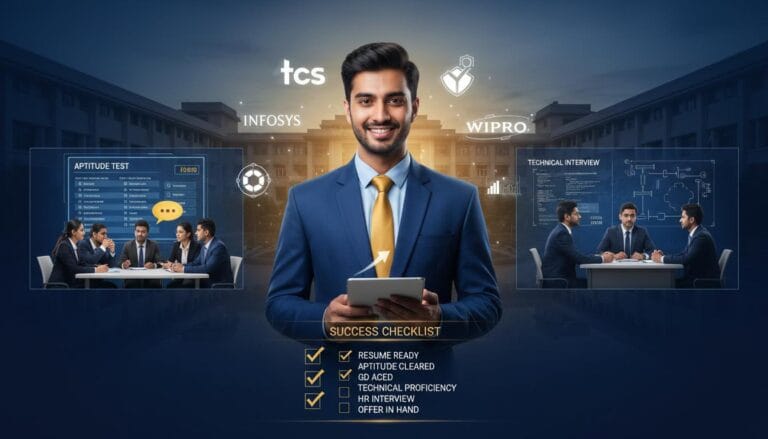
Featured Image Title: Indian Graduate with a Shortlisted Resume — Career Growth 2026
Featured Image Alt Text: Confident Indian job seeker holding a resume marked “shortlisted” on a laptop screen
AI Image Prompt (Ultra Realistic):
> A photorealistic close-up portrait of a young Indian graduate (mid-20s) sitting at a modern desk, looking at a laptop screen displaying a green “Shortlisted” status badge on a resume document. The graduate has a relieved, confident smile. Warm desk lamp lighting, books and a notepad nearby, clean background, 85mm lens, 8K, professional editorial blog thumbnail, aspirational career tone.
Pinterest Pin Title: How to Write a Resume That Gets Shortlisted in 2026
Pinterest Description: Indian HR-approved resume guide for 2026. ATS-friendly templates, bullet point formulas, common mistakes, and practical examples for freshers and professionals.
—
SECTION: MONETIZATION OPPORTUNITIES
Amazon Products (Primary)
- Resume Scorecard Bundle — best overall career kit
- Canva Pro Subscription — for visual resume design
- Grammarly Premium — writing polish
- Notion Career Planner — job application tracker
- Slidesgo Premium — interview PPT templates
- Kindle Unlimited — career book subscription
- Logitech C920 HD Webcam — for online interviews
- Sony WH-CH720N — headphones for focused work
- Lenovo Tab M10 Plus — budget study device
- Python Book (Automate the Boring Stuff) — skill building
Amazon Associates Tracking ID: `akshay20060d7-21`
Affiliate Software / SaaS Referrals
- LinkedIn Premium (career upgrade)
- Naukri FastForward (resume services)
- Grammarly Premium (writing)
- Canva Pro (design)
- Notion Plus (productivity)
Digital Products
- “Resume + Cover Letter AI Bundle”
- “Indian Job Application Tracker”
- “Interview Q&A Master Pack”
Lead Magnet Ideas
- Free PDF: “20-Point Resume Scorecard 2026”
- Email course: “From Resume to Offer in 30 Days”
- Checklist: “ATS Resume Audit Checklist”
Internal Linking Opportunities
- `/best-free-ai-tools-for-students-in-india-2026/`
- `/legit-online-jobs-for-students-in-india-2026/`
- `/start-freelancing/`