How to Build a Portfolio as a Fresher: 7 Tips
how to build a portfolio as a fresher is worth learning properly because Indian students and young professionals are competing in a market where attention, trust, and proof matter. This article keeps the advice practical: what to do first, what to avoid, and how to turn the idea into something visible.
Quick Take
Make your value easy to verify. A recruiter should understand your target role, skills, and proof within a few seconds.
Table of Contents
A Realistic Indian Reader Scenario
Think of a fresher applying to 40 jobs and hearing nothing back. Usually the problem is not effort; it is unclear positioning. Recruiters need to see the role you want, the proof you have, and why you are worth a conversation. A good how to build a portfolio as a fresher workflow turns scattered effort into a visible career asset.
The useful test is simple: after reading this, can you create something better than what you had yesterday? That could be cleaner notes, a stronger resume, a first client sample, a better LinkedIn headline, a project outline, or a useful article draft.
How to Build a Portfolio as a Fresher: Practical Framework
Start with proof of work
A project, portfolio link, improved resume, or LinkedIn post is stronger than a generic claim.
Use numbers where honest
Mention marks, users, time saved, project scope, tools used, or measurable improvement.
Build a weekly outreach habit
Five thoughtful messages per week beat fifty random applications.
Review your story
Your resume, LinkedIn profile, email, and interview answers should all point to the same role direction.
What to Use, Skip, and Measure
| Choice | Use it when | Skip it when | Measure this |
|---|---|---|---|
| Free tools and templates | You are testing the workflow | You keep switching tools | First useful output created |
| Paid products or gear | You repeat the task every week | You have not validated the need | Time saved or quality improved |
| AI assistance | You need structure, ideas, or review | You cannot verify the answer | Accuracy and originality |
| Mentor or peer feedback | You need a reality check | You only want praise | Specific improvements made |
India-Specific Recommendations
Keep budgets realistic. Many students do not need premium subscriptions immediately. Start with free plans, college resources, library access, YouTube tutorials, and LearnEarnScale tools. Spend only when a product saves time every week or improves the quality of work you publish.
Use examples that fit Indian contexts: campus placements, internships, UPI payments, hostel study schedules, Tier-2 and Tier-3 college constraints, fresher resumes, and beginner-friendly side projects. Generic global advice often misses these details.
Original Checklist You Can Use Today
- Write the outcome in one sentence.
- Create a rough version in 30-60 minutes.
- Add one example from your own situation.
- Ask one person for specific feedback.
- Improve the output and save it as proof.
Common Mistakes to Avoid
- Using the same resume for every job role.
- Writing long LinkedIn summaries without proof or direction.
- Waiting until placement season to build projects and contacts.
- Asking for referrals before showing why you are relevant.
Related Terms and Search Intent
You will also see this topic described with phrases like:
- career roadmap
- job search system
- resume proof
- interview preparation
These variations are included naturally because real readers do not always search with the exact same words. The goal is clarity, not repetition.
What I Would Do First
If you are starting from zero, do not try to master everything at once. Pick one small result that can be finished this week. A student can create a clean notes PDF. A fresher can improve one resume section. A beginner trying to earn online can create one sample offer. Small finished work teaches more than a large unfinished plan.
Use a simple rule: if an action does not create proof, save time, improve clarity, or help someone trust you, it can wait. This keeps the workflow practical and prevents the usual trap of collecting tools, templates, and advice without doing anything visible.
Quality Review Rubric
| Question | Good answer | Needs improvement |
|---|---|---|
| Is the output specific? | It solves one clear problem. | It tries to cover everything. |
| Is there proof? | It includes examples, numbers, screenshots, or links. | It only makes claims. |
| Is it useful for India? | It considers student budgets, hiring cycles, and local context. | It copies generic global advice. |
| Can it be repeated? | The process can be done weekly. | It depends on motivation or luck. |
Career Mentor Notes
For how to build a portfolio as a fresher, the biggest advantage comes from clarity. Most freshers sound similar because they list skills without showing proof. A stronger approach is to connect each skill to a project, result, or learning story. Even a small college project becomes more valuable when you explain the problem, tools used, decisions made, and final outcome.
If you are applying for jobs in India, keep a tracker. Add company name, role, date applied, resume version, contact person, follow-up date, and response. This sounds boring, but it quickly shows what is working. Random applications create anxiety; a tracker creates information.
Pros and Cons
- Pros: better positioning, stronger interviews, clearer communication, and more confidence in applications.
- Cons: it takes repeated editing, feedback can feel uncomfortable, and results may take several weeks.
Useful LearnEarnScale Resources
Use these internal resources when you want to turn the article into action:
- Career Growth guides
- Resume to PDF
- Start Here
- Resources
- PDF Tools
- Typing Speed Test
- Resume Builder
- CGPA Calculator
Helpful External References
Use official or well-known references when you need more context:
Recommended Gear and Tools
Some links below are Amazon affiliate links. LearnEarnScale may earn a small commission at no extra cost to you. Treat these as optional, not mandatory.
- one solid interview preparation book: useful only if it removes a real bottleneck in your workflow. Check options on Amazon
- a clear webcam for online interviews: useful only if it removes a real bottleneck in your workflow. Check options on Amazon
- a notebook for applications, follow-ups, and reflections: useful only if it removes a real bottleneck in your workflow. Check options on Amazon
FAQ
Is this beginner friendly?
Yes. Start with the free steps first. You do not need expensive tools to create a useful first version.
How soon can I see results?
Study and productivity improvements can show up within a week. Career and income outcomes usually need four to twelve weeks of consistent action.
What should I avoid?
Avoid copying templates blindly, trusting unverified claims, and buying tools before you know what problem you are solving.
How do I make this more trustworthy?
Add proof: screenshots, project links, numbers, examples, dates, or a short explanation of how you tested the idea.
Conclusion
The smartest way to approach how to build a portfolio as a fresher is to keep it practical. Choose one outcome, build one proof asset, and improve it with feedback. If you do that consistently, the topic stops being theory and becomes a useful part of your study, career, or earning system.
Next Step
Start with Start Here, explore Resources, or use PDF Tools to turn your work into something clean and shareable.
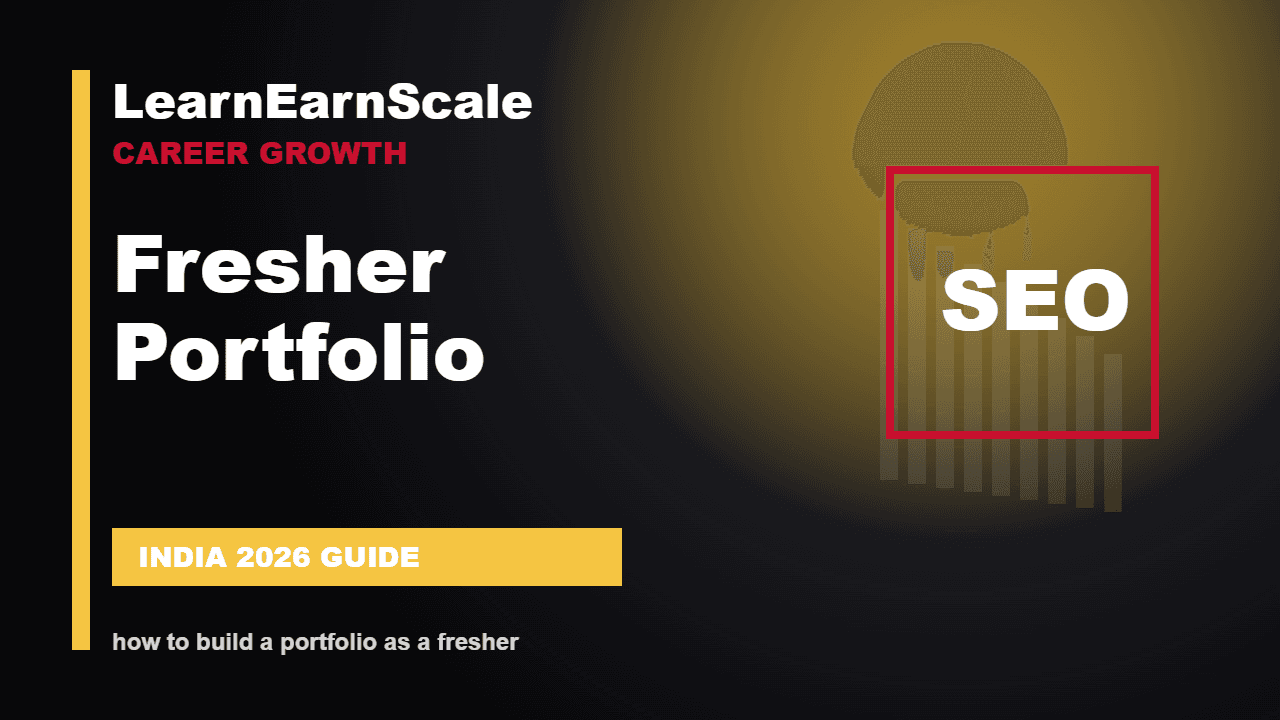
how to build a portfolio as a fresher Visual Checklist
Also read: AI Driven: 7 Tips
Also read: How to Start Freelancing with AI: 7 Tips
Also read: Career Roadmap After Graduation: 7 Tips
Also read: How to Crack Interviews using AI: 7 Tips
Also read: How to Switch Industries using AI: 7 Tips